Living in Seville, Granada and inland Andalusia as an American: cost of living, cities and daily life
See what life costs in Seville, Granada, Córdoba and Cádiz, how the cities differ, and how to judge the summer heat before you commit.
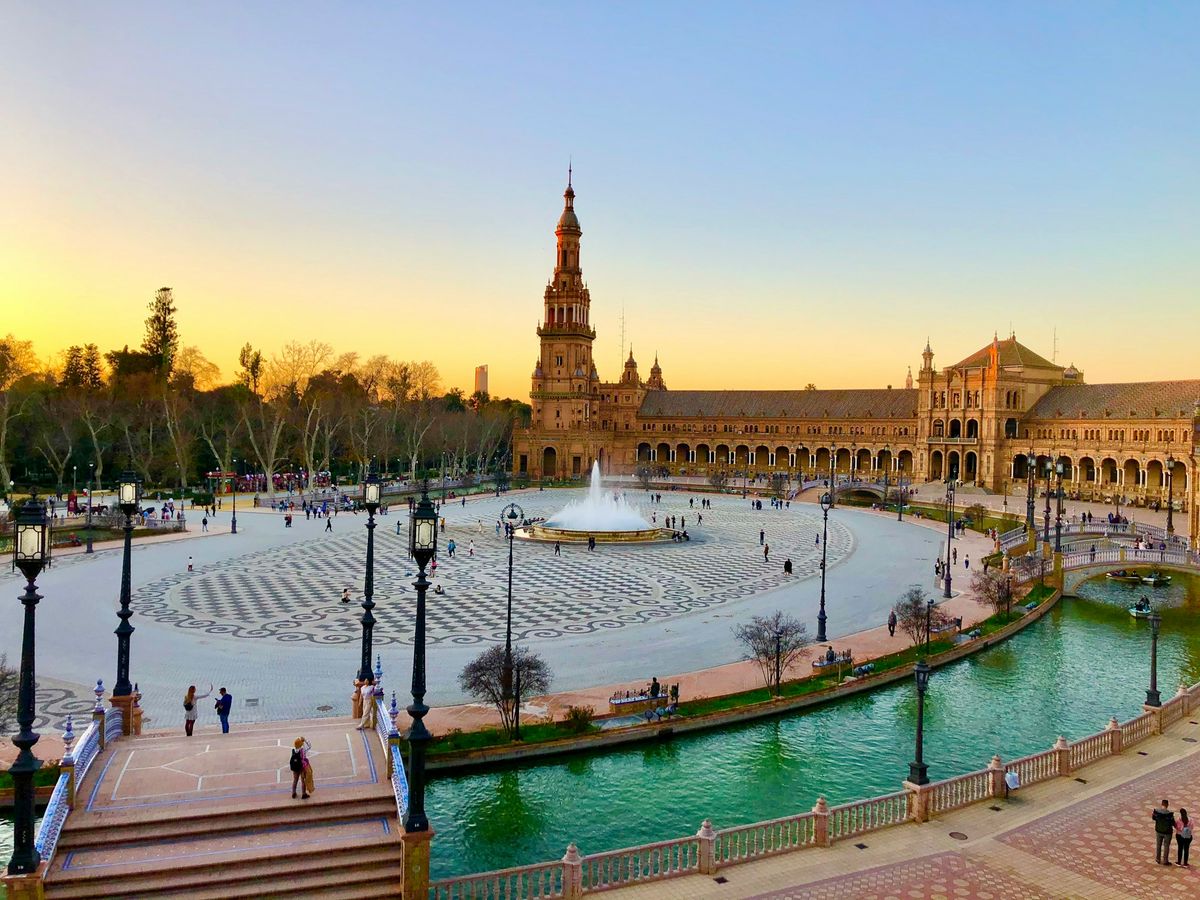
Living in Seville means a beautiful, flat, sociable city where life happens in the street and a couple can live well on roughly €1,750 to €3,000 a month including rent (about $2,000 to $3,450). Seville, Granada and Córdoba suit people who want everyday Spanish life at lower cost and are ready to speak Spanish and plan around a very hot summer.
| At a glance | Seville and inland Andalusia |
|---|---|
| Climate | Mild, sunny winters with highs around 61°F (16°C). Summer highs around 95 to 97°F (35 to 36°C) in Seville and Córdoba, often above 104°F (40°C) |
| Nearest international airport | Seville, about 6 miles (10 kilometers) from the center, with European routes and no regular US flights. Málaga’s larger airport is about two hours away by train |
| Hospitals | Large public university hospitals in Seville, Granada and Córdoba, with a smaller private sector than on the coast |
| Typical rent | €800 to €1,300 a month in Seville (about $920 to $1,500); €650 to €1,000 in Granada (about $750 to $1,150) |
| Foreign community | Small. Mostly students, English teachers and a modest number of retirees and remote workers |
| Language | Spanish is needed every day. English is limited outside tourism and the universities |
All costs on this page are estimates for early planning. Dollar amounts assume roughly $1.15 to the euro, and that rate moves.
Who it suits, and who it doesn’t
- A good fit: people who want to live among Spaniards, learn the language and stretch a pension or remote income, and who can travel in July and August.
- A harder fit: anyone sensitive to heat, people who need medical care or paperwork in English, frequent flyers to the US, and families who want a wide choice of international schools.
The cities and how they differ
| City | What it’s like | Rent level |
|---|---|---|
| Seville | Andalusia’s capital and largest city, flat and easy to cycle, with the biggest hospitals and the best transport links in the region | Medium |
| Granada | A university city at about 2,400 feet (740 meters) below the Sierra Nevada. Cooler nights, cold winters, skiing about 20 miles (32 kilometers) away | Lower |
| Córdoba | Smaller and quieter, with a large historic center and summers as hot as Seville’s. About 45 minutes from Seville by high-speed train | Lower |
| Cádiz | An old port city on the Atlantic, about 75 miles (120 kilometers) south of Seville. Sea breezes keep summers cooler; winters are damp | Medium |
| Jerez de la Frontera | An inland town near Cádiz known for sherry and horses, with a small airport | Lowest |
Seville’s neighborhoods
- Santa Cruz and El Arenal: the historic center beside the cathedral. Beautiful, crowded with visitors and full of tourist apartments.
- Triana: across the river, with a strong local identity, a market and many bars.
- Los Remedios: next to Triana, with wider streets and larger apartments, many with elevators.
- Alameda and Macarena: the northern part of the old town, younger and cheaper, with nightlife around the Alameda de Hércules.
- Nervión and El Porvenir: residential districts east and south of the center with newer buildings, shops and the main train station nearby.
Cost of living
Inland Andalusia is where Spain is still clearly cheap. A weekday set lunch (menú del día) often costs €10 to €14, and Granada’s bars still serve a free tapa with each drink.
| City | Monthly rent, one- or two-bedroom on a long-term lease |
|---|---|
| Seville | €800 to €1,300 (about $920 to $1,500) |
| Cádiz | €750 to €1,200 (about $860 to $1,400) |
| Granada | €650 to €1,000 (about $750 to $1,150) |
| Córdoba | €600 to €950 (about $690 to $1,100) |
| Jerez de la Frontera | €550 to €900 (about $630 to $1,050) |
Check current listings before you rely on these figures. Budget for electricity: air conditioning runs for four months in Seville and Córdoba, and older apartments have little insulation or heating for winter. See the cost of living in Spain and renting in Spain.
Healthcare
Seville has two large public teaching hospitals, Virgen del Rocío and Virgen Macarena. Granada and Córdoba each have university hospitals of their own. Private hospitals exist in every city, though fewer staff speak English than on the Costa del Sol, so expect to handle appointments in Spanish or bring someone who can.
Public care is run by the Andalusian health service, and whether you can use it depends on how you are resident. See healthcare in Spain.
Getting there and getting around
Seville’s airport has flights across Spain and Europe and has had no regular direct flights to the US. Most people connect through Madrid, which is about two and a half hours away by high-speed train, or fly from Málaga. Granada and Jerez have small airports with mainly domestic routes. Check current schedules, because routes change.
High-speed trains link Seville, Córdoba, Málaga, Granada and Madrid. Inside Seville you can walk or cycle almost everywhere on level ground, and there are buses, a tram and a metro line. Granada is hillier, especially the Albaicín quarter. A car is useful only if you live in a village.
Regional taxes
Seville, Granada, Córdoba and Cádiz are all in Andalusia, which has cut its regional taxes in recent years. It has rebated its regional wealth tax and given large reductions on inheritance and gift tax between close relatives. A national tax on net wealth above €3 million still applies. These rules change, so have an adviser confirm them. See taxes in Spain.
The downsides
- Summer heat. From late June to early September, Seville and Córdoba are among the hottest cities in Europe. Streets empty in the afternoon, and many residents leave for the coast in August.
- Language. Little happens in English, and the Andalusian accent is fast and drops consonants. Learners find it hard at first.
- Tourism in the centers. Seville’s old town and Granada’s Albaicín are crowded for much of the year, and Holy Week and the April Fair close streets and raise prices in Seville.
- Work. Andalusia has some of the highest unemployment in Spain, and local salaries are low. Most Americans here bring their income with them. See jobs in Spain for Americans.
- Cold homes in winter. Buildings are designed for heat. Granada’s winter nights drop near freezing.
How people usually start
- Visit in July or August before you decide. If you can live with the heat for a week, you know what you are choosing.
- Take a language course. Seville and Granada have many Spanish schools, and a month of classes is a common way to try a city.
- Rent first, ideally through one summer and one winter, before you think about buying property.
- Check your residency route. The non-lucrative visa suits retirees and the digital nomad visa suits remote workers. Spain residency requirements compares them.
If the heat or the language is too much, the coast around Málaga is two hours away, and Madrid is an easy train ride. The best places to live in Spain covers every region, and a local real estate agent can help you find a long-term rental.
Common questions
How much does it cost to live in Seville, Spain?
The cost of living in Seville, Spain for a couple is roughly €1,750 to €3,000 a month including rent (about $2,000 to $3,450), and a single person spends about two-thirds of that. Rent for a one- or two-bedroom apartment in a central area runs roughly €800 to €1,300. These are estimates.
Is Seville expensive?
Seville is not expensive by Spanish or US standards. Rent in Seville runs roughly a third below Madrid or Barcelona on our estimates, and eating out is among the cheapest of any large Spanish city. Prices in the tourist center and during Holy Week and the April Fair are higher.
What is the cost of living in Granada, Spain?
The cost of living in Granada, Spain for a couple is roughly €1,550 to €2,600 a month including rent (about $1,800 to $3,000). Granada is one of the cheapest cities in Spain that foreigners choose, with rent for a one- or two-bedroom apartment at roughly €650 to €1,000. These are estimates.
How hot is Seville in summer?
Seville is the hottest large city in Spain in summer. Average highs in July and August are around 95 to 97°F (35 to 36°C), and heat waves in Seville regularly pass 104°F (40°C). Winters are mild and sunny, with daytime highs around 61°F (16°C).
Sources
This page is general information, not professional advice. Rules and amounts change, and officials apply them differently. Confirm the details with the relevant authority or a qualified professional before you act on them.