Living in Granada, Spain as an American: cost of living, neighborhoods and daily life
See what life in Granada costs, which neighborhood fits you, how safe it is, and how a university city below the Sierra Nevada differs from the coast.
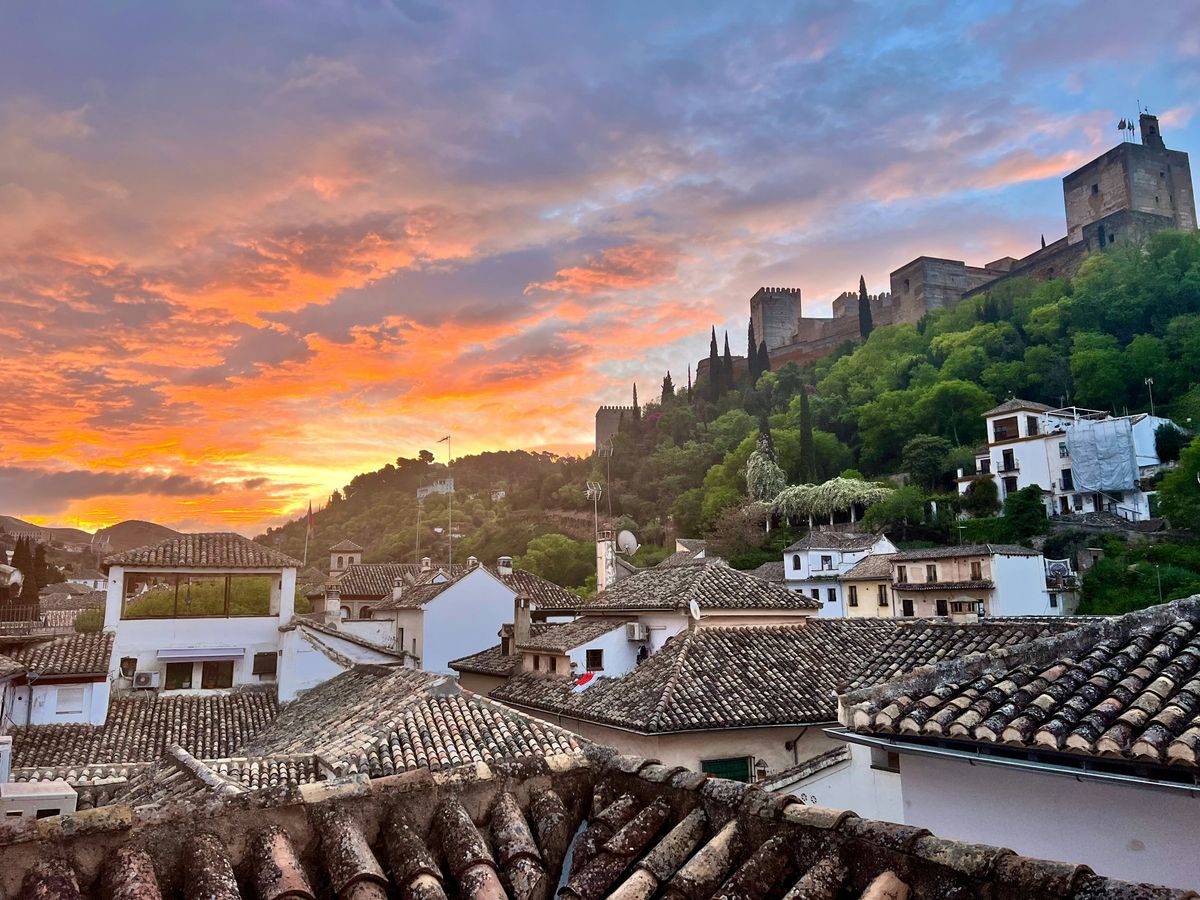
Living in Granada means a compact, hilly university city below the Sierra Nevada, where a couple can live well on roughly €1,550 to €2,600 a month including rent (about $1,800 to $3,000). It suits people who want everyday Spanish life at low cost, with mountains, history and a young population, and who are ready to speak Spanish.
| At a glance | Granada |
|---|---|
| Climate | Hot, dry summers with highs in the mid 90s°F (about 34 to 35°C). Cold winters for southern Spain, with nights near freezing and snow on the Sierra Nevada |
| Altitude | About 2,400 feet (740 meters) |
| Nearest international airport | Granada’s own airport is small and mainly domestic. Málaga, about an hour and a half away, has far more routes. Neither has had regular year-round US flights |
| Hospitals | Two large public university hospitals and several private hospitals |
| Typical rent | €650 to €1,000 a month for a one- or two-bedroom apartment (about $750 to $1,150) |
| Foreign community | Students, Spanish learners, English teachers and a modest number of retirees and remote workers |
| Language | Spanish is needed every day. English is limited outside tourism and the university |
All costs on this page are estimates for early planning. Dollar amounts assume roughly $1.15 to the euro, and that rate moves.
Most searches for Granada come from visitors planning a trip to the Alhambra. This page is for people thinking of living there. For Seville, Córdoba and Cádiz, see living in Seville and inland Andalusia.
Who it suits, and who it doesn’t
- A good fit: retirees and remote workers who want a low-cost Spanish city, people learning Spanish, hikers and skiers, and anyone who likes a city full of students.
- A harder fit: people who need care or paperwork in English, frequent flyers to the US, families who want a wide choice of international schools, and anyone who can’t manage steep streets.
Neighborhoods and nearby towns
Granada is small enough to cross on foot in under an hour, though many streets are steep.
| Area | What it’s like | Rent level |
|---|---|---|
| Centro and the cathedral area | Shops, the main market, government offices and buses. Busy and convenient, with older apartments | Medium |
| Realejo | The old Jewish quarter below the Alhambra. Central, characterful and popular with foreigners | Medium |
| Albaicín | The Moorish quarter on the hill opposite the Alhambra, a World Heritage site. Beautiful views, cobbled lanes, little car access and many tourists | Medium to high |
| Camino de Ronda and around | Flat, modern blocks west of the center, near the metro line. Many students | Lower |
| Zaidín | A large residential district in the south with local shops and markets, near the main hospital campus | Lower |
| Hillside towns (Monachil, La Zubia, Huétor Vega, Cájar) | Houses with gardens and mountain views 15 to 20 minutes from the center. A car helps | Medium |
| The Alpujarra | White villages on the southern slopes of the Sierra Nevada, about an hour from the city. Quiet, rural and cold in winter | Lowest |
Cost of living
Granada is one of the cheapest cities in Spain that foreigners choose. Many bars still serve a free tapa with each drink, and a weekday set lunch (menú del día) often costs €10 to €14.
| Monthly budget for a couple, renting | Approximate amount |
|---|---|
| Rent, one- or two-bedroom | €650 to €1,000 |
| Utilities, internet and phones | €150 to €250 |
| Groceries | €400 to €550 |
| Eating out and leisure | €200 to €400 |
| Transport | €40 to €150 |
| Private health insurance, if you need it | €100 to €250 |
| Total | €1,550 to €2,600 (about $1,800 to $3,000) |
Check current listings before you rely on these figures. Rents rise near the university in September, and many central apartments are let to students for the academic year. Budget for heating as well as air conditioning: Granada’s older homes are cold in winter. See the cost of living in Spain and renting in Spain.
Is Granada safe?
Granada is generally safe for residents, and most people walk home at night without a second thought. The common problems are:
- Pickpocketing and bag theft in the places visitors crowd: the Albaicín viewpoints, the streets around the cathedral and the bus to the Alhambra.
- Street sellers and people offering sprigs of rosemary near the cathedral, who then ask for money.
- Some outlying districts with a poorer reputation and more social problems. Walk an area at different times of day before you sign a lease, and ask neighbors.
Spain’s overall crime rates are low by US standards. For current advice, check the US embassy in Spain.
Healthcare
Granada has two large public university hospitals, Virgen de las Nieves and San Cecilio, and several private hospitals. Fewer staff speak English than on the Costa del Sol, so expect to handle appointments in Spanish or bring someone who can.
Public care is run by the Andalusian health service, and whether you can use it depends on how you are resident. See healthcare in Spain.
Getting there and getting around
Granada’s airport is about 10 miles (15 kilometers) west of the city, with mainly domestic routes. Most people fly through Madrid or use Málaga, about an hour and a half away by car or bus. Neither airport has had regular year-round US flights, so check current schedules.
High-speed trains link Granada with Madrid in roughly three and a half hours, and with Córdoba, Seville and Málaga. Inside the city there are buses, small minibuses that climb into the Albaicín, and a light rail line. You don’t need a car in the center. You will want one in the hillside towns or the Alpujarra.
The Sierra Nevada ski area is about 20 miles (32 kilometers) away, and the coast is roughly an hour south.
Regional taxes
Granada is in Andalusia, which has cut its regional taxes in recent years. It has rebated its regional wealth tax and given large reductions on inheritance and gift tax between close relatives. A national tax on net wealth above €3 million still applies. These rules change, so have an adviser confirm them. See taxes in Spain.
The downsides
- Summer heat. July and August are hot and dry, though nights are cooler than in Seville.
- Cold homes in winter. Buildings are designed for heat, and winter nights drop near freezing.
- Hills. The Albaicín and Realejo are steep, with steps and cobbles. Think about how you will carry shopping and manage in later years.
- Language. Little happens in English, and the Andalusian accent is fast.
- Tourism and students. The historic center is crowded much of the year, and some streets are loud on weekend nights.
- Distance to the US. Every trip home means a connection, usually through Madrid.
How people usually start
- Visit twice, once in summer and once in January, before you decide.
- Take a Spanish course. Granada has many language schools, and a month of classes is a common way to try the city.
- Rent first, ideally for a year, before you think about buying property.
- Choose your residency route. The non-lucrative visa suits retirees and the digital nomad visa suits remote workers. Spain residency requirements compares them.
If you want a bigger, flatter city, compare Seville, Córdoba and Cádiz. For the sea and more English, see Málaga and the Costa del Sol. The best places to live in Spain covers every region, and a local real estate agent can help you find a long-term rental.
Common questions
What is the cost of living in Granada, Spain?
The cost of living in Granada, Spain for a couple is roughly €1,550 to €2,600 a month including rent (about $1,800 to $3,000), and a single person spends about two-thirds of that. Rent for a one- or two-bedroom apartment runs roughly €650 to €1,000 a month. These are estimates, so check current listings.
Is Granada, Spain safe?
Granada is generally a safe city to live in, with violent crime against residents uncommon. The usual problem is pickpocketing and bag theft in crowded tourist areas such as the Albaicín viewpoints and the streets around the cathedral. As in any city, some outlying districts have a poorer reputation, so walk an area at night before you sign a lease.
Is Granada a good place to live for Americans?
Granada suits Americans who want a lively, affordable Spanish city with history, mountains and a large university, and who are ready to live in Spanish. The drawbacks are hot summers, cold homes in winter, a small airport with no US flights and fewer English-speaking services than on the coast.
How far is Granada from the beach?
The nearest beaches are on the Costa Tropical, around Almuñécar and Salobreña, roughly an hour's drive south. Málaga and the Costa del Sol are about an hour and a half by car or bus. Drive times vary with traffic and the route.
Sources
This page is general information, not professional advice. Rules and amounts change, and officials apply them differently. Confirm the details with the relevant authority or a qualified professional before you act on them.