Living in Alicante and the Costa Blanca as an American: cost of living, towns and daily life
See what life costs in Alicante and the Costa Blanca towns from Dénia to Torrevieja, how the north and south of the coast differ, and how to try it first.
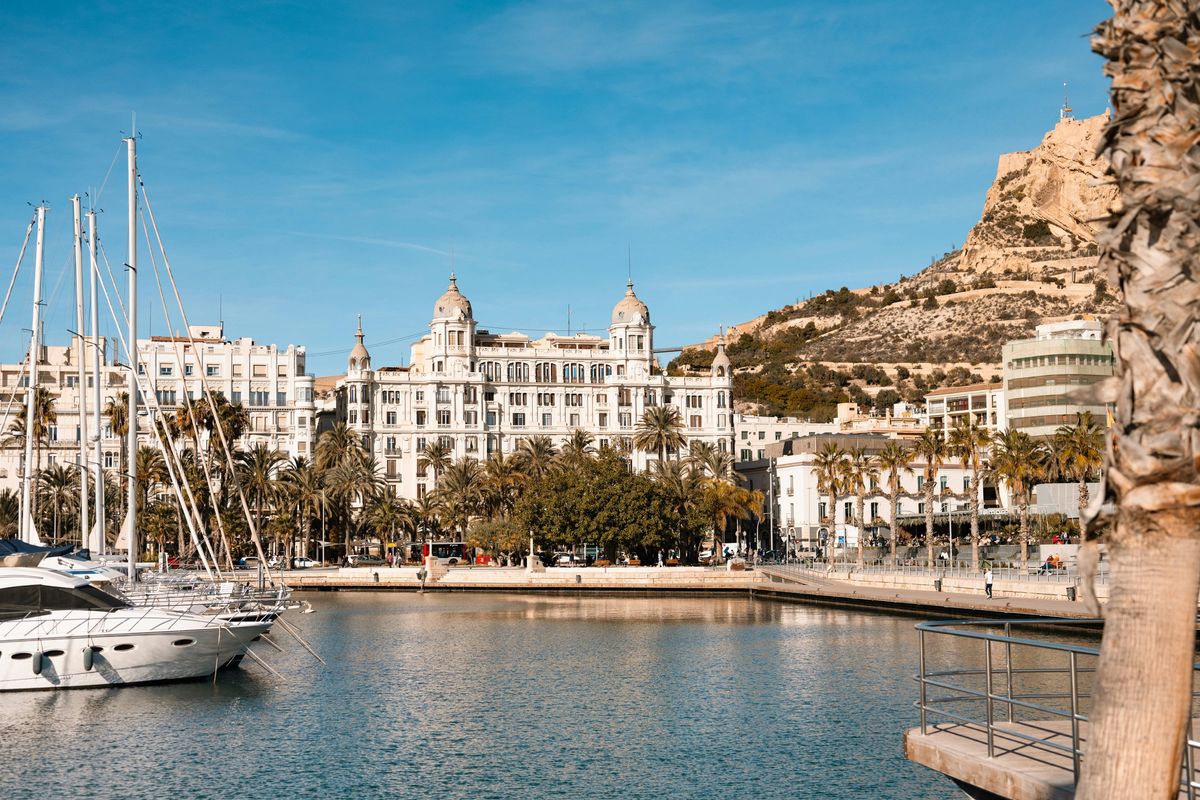
Living in Alicante gives you a sunny, compact city with a beach beside the old town, a busy airport and prices well below Valencia or Málaga. It suits retirees and remote workers who want Mediterranean life on a moderate budget, and a couple can live on roughly €1,700 to €2,900 a month including rent (about $1,950 to $3,350).
| At a glance | Alicante and the Costa Blanca |
|---|---|
| Climate | One of the driest and sunniest parts of Spain. Winter highs around 63°F (17°C), summer highs around 86 to 90°F (30 to 32°C) and humid |
| Nearest international airport | Alicante-Elche, about 6 miles (10 kilometers) from the city. Many European routes and no regular direct US flights |
| Hospitals | Public hospitals in Alicante and the main coastal towns, plus private hospitals used to foreign patients |
| Typical rent | €750 to €1,200 a month in Alicante (about $860 to $1,400); more in Jávea and Moraira, less around Torrevieja |
| Foreign community | Very large, mainly British, Dutch, German and Scandinavian retirees. Americans are a small minority |
| Language | Spanish in the city, with English widely spoken in the coastal towns. Valencian is also official and used in schools |
All costs on this page are estimates for early planning. Dollar amounts assume roughly $1.15 to the euro, and that rate moves.
“Costa Blanca” is mostly a vacation search. This page is for people planning to live there.
Who it suits, and who it doesn’t
- A good fit: retirees on a moderate income, remote workers who want a beach city at lower rent, and people who like having an established foreign community nearby.
- A harder fit: frequent flyers to the US, people who want a big-city cultural life, and anyone hoping to be surrounded only by Spaniards in the coastal towns.
Alicante and the towns along the coast
The Costa Blanca is the coast of Alicante province, about 125 miles (200 kilometers) from Dénia in the north to Pilar de la Horadada in the south. The north is hilly, greener and more expensive. The south is flat, dry and cheaper.
| Place | What it’s like | Rent level |
|---|---|---|
| Alicante: center and old town | A real Spanish city of about 350,000 with a castle, a marina and a palm-lined promenade | Medium |
| Alicante: Playa de San Juan and El Campello | A long beach lined with modern apartment blocks, linked to the center by tram | Medium to high |
| Dénia | A working port town with ferries to the Balearic Islands, about 56 miles (90 kilometers) north of Alicante | Medium |
| Jávea and Moraira | Villa towns among pine-covered hills, with a large British and northern European community | Highest |
| Calpe and Altea | Calpe is built up around its rock; Altea is a white hilltop old town with an arts scene | Medium to high |
| Benidorm | High-rise resort city, busy all year, with good services and low prices outside the summer | Medium |
| Torrevieja and Orihuela Costa | Flat southern resort area of housing developments, with the lowest prices and many foreign retirees | Lower |
Cost of living
Alicante is one of the cheaper cities in Spain that foreigners choose. A weekday set lunch (menú del día) runs about €11 to €15, and groceries for a couple about €380 to €550 a month.
| Place | Monthly rent, one- or two-bedroom on a long-term lease |
|---|---|
| Jávea and Moraira | €1,000 to €1,800 (about $1,150 to $2,050) |
| Playa de San Juan | €900 to €1,500 (about $1,050 to $1,700) |
| Altea and Calpe | €900 to €1,500 (about $1,050 to $1,700) |
| Dénia | €850 to €1,400 (about $980 to $1,600) |
| Benidorm | €800 to €1,300 (about $920 to $1,500) |
| Alicante, central | €750 to €1,200 (about $860 to $1,400) |
| Torrevieja and Orihuela Costa | €650 to €1,050 (about $750 to $1,200) |
Check current listings before you rely on these figures. In the resort towns many owners offer only September-to-June contracts and switch to weekly rentals in summer. See renting in Spain and the cost of living in Spain.
Healthcare
Alicante has a large public university hospital, and there are public hospitals along the coast in towns including Dénia, Villajoyosa and Torrevieja. Private hospitals in Alicante, Benidorm and Torrevieja are used to foreign patients, and many have interpreters. Whether you can use the public system depends on how you are resident, and people on a non-lucrative visa need private insurance at first. See healthcare in Spain.
Getting there and getting around
Alicante’s airport is one of the busiest in Spain, with year-round flights across Europe, especially to Britain and northern Europe. It has had no regular direct flights to the US, so trips home connect through Madrid or another European hub. Check current schedules, because routes change.
High-speed trains reach Madrid in about two and a half hours. Valencia is about 105 miles (170 kilometers) north, under two hours by train. A tram runs from Alicante up the coast to Benidorm and continues to Dénia. The city is walkable. In the villa towns and housing developments of Jávea, Moraira and Orihuela Costa, you will need a car.
Regional taxes
Alicante is in the Valencia region, which applies the wealth tax and has income tax rates above Madrid’s. The regional government has cut inheritance and gift tax between close relatives in recent years. These rules change, so have an adviser confirm them. See taxes in Spain.
The downsides
- Summer heat and humidity. July and August are sticky, and nights stay warm. Air conditioning is a necessity.
- Summer crowds. The population of the resort towns multiplies in July and August, and parking and traffic get difficult.
- Storms and floods. Fall can bring sudden, violent rain to this coast, and the low-lying south of the province has flooded badly. Check official flood maps before you rent or buy.
- Developments far from anything. Many cheaper homes are in housing estates with no town center, where every errand needs a car.
- Water. This is a dry region that depends on transfers and desalination, and drought restrictions occur.
- A foreign bubble. In some towns English is more common than Spanish, which isn’t what everyone wants.
- Cold homes in winter. Few apartments have heating.
How people usually start
- Visit in winter, then in August. Winter shows which towns stay open. August shows the heat and the crowds.
- Try the north and the south. Jávea and Torrevieja are both on the Costa Blanca and feel like different countries.
- Rent for a year first. When you are ready, see buying property in Spain, and have a lawyer check the planning status of any home outside a town.
- Choose your residency route. Most retirees use the non-lucrative visa, and remote workers the digital nomad visa. Spain residency requirements compares them.
For a bigger city on the same coast, see Valencia. For milder winters and a larger English-speaking community, compare Málaga and the Costa del Sol. Ferries from Dénia reach Mallorca and the Balearic Islands. The best places to live in Spain covers every region, and a local real estate agent can help you find a long-term rental.
Common questions
How much does it cost to live in Alicante, Spain?
The cost of living in Alicante, Spain for a couple is roughly €1,700 to €2,900 a month including rent (about $1,950 to $3,350), and a single person spends about two-thirds of that. Rent for a one- or two-bedroom apartment in a central area runs roughly €750 to €1,200. These are estimates.
Is Alicante cheaper than Valencia?
Yes. Alicante is cheaper than Valencia mainly because of rent, which on our estimates runs roughly a fifth to a quarter lower for a similar apartment. Groceries and eating out in Alicante cost about the same as in Valencia. Rents in Alicante have been rising as more foreign residents arrive.
Is Alicante a good place to live for Americans?
Alicante suits Americans who want a sunny, affordable, mid-sized city on the beach with a busy airport and a large international community. The drawbacks of living in Alicante are hot, humid summers, no direct flights to the US, heavy summer tourism and a small American community compared with the British and northern European ones.
Where do expats live on the Costa Blanca?
Expats on the Costa Blanca live mainly in Jávea, Moraira, Calpe, Altea and Dénia in the north, and in Torrevieja and Orihuela Costa in the south. In Alicante itself, foreign residents gather in the center and at Playa de San Juan. British, Dutch, German and Scandinavian residents far outnumber Americans.
Sources
This page is general information, not professional advice. Rules and amounts change, and officials apply them differently. Confirm the details with the relevant authority or a qualified professional before you act on them.